Uncategorized

Uncategorized

HubSpot’s New TikTok Integration: What It Means for Your Marketing Strategy

TikTok has officially arrived in HubSpot’s Marketing Hub, and it’s a game-changer for businesses looking to streamline their social media efforts. This native integration allows marketers to sync, manage, and measure both TikTok ads and organic content, all within the platform where customer data already lives.
Why This Matters
For small and medium-sized businesses, TikTok represents an unprecedented opportunity to reach new audiences. But running campaigns in isolation from your customer data limits their potential. With HubSpot’s TikTok integration, your campaigns are now powered by the context of your Smart CRM,  meaning real customer insights inform every decision.
 
What You Can Do Now
Smarter Targeting: Sync your CRM contact segments directly to TikTok to target audiences based on lifecycle stage, deal history, and purchase behaviour. Build lookalike audiences from your best customers and let the system learn what drives conversions for your business.
Unified Campaign Management: Schedule and publish TikTok content alongside all your other channels from one dashboard. Use HubSpot’s AI tools to generate captions and hashtags, and manage comments and mentions in your social inbox with intelligent reply suggestions.
True Attribution: Whether it’s paid ads or organic content, TikTok performance now rolls into unified campaign reports that connect interactions back to contacts, deals, and closed revenue. Auto-tracking links TikTok interactions to your contacts, triggering automated follow-up workflows.
 
The Bottom Line
This integration eliminates the friction of managing TikTok separately from your CRM. Your campaigns improve over time because every conversion feeds back into your business context, creating a continuous cycle of optimisation.
Ready to unlock TikTok’s potential? HubSpot customers can enable this integration today.
Need help with your HubSpot Platform or considering HubSpot, then why not get in touch with one of our Source Specialists today? 
{{cta(‘191750915166′,’justifycenter’)}}

Uncategorized

How Private Equity Firms Can Protect and Improve Portfolio Companies Through Modern Marketing Strategy

Private equity firms face critical challenges when driving value creation in portfolio companies while navigating an increasingly complex marketing landscape. The stakes are high, and one vital element of growing a business, its marketing, if not done correctly can erode brand equity, waste capital, and delay exit timelines. However, done right then, strategic marketing investments and the right partners can accelerate growth, improve unit economics, and command premium valuations.
The Marketing Value Gap in Private Equity
Most PE firms excel at operational improvements, cost optimization, and strategic repositioning. Yet marketing often remains an overlooked lever for value creation. Portfolio companies frequently operate with outdated marketing strategies, siloed data systems, and teams lacking the expertise to capitalize on modern channels and technologies. While some business owners might even look for investment because they understand that their sales and marketing operation has lost momentum and needs re-invigorating. 
This gap with marketing represents both risk and opportunity. Without proper marketing infrastructure, portfolio companies become vulnerable to competitive disruption, customer acquisition inefficiencies, and brand dilution. Conversely, firms that systematically improve marketing capabilities across their portfolios consistently achieve higher returns and more successful exits.
Core Protective Measures for Portfolio Company Marketing
PE and investment firms will attempt to fix some of these challenges in a variety of ways including;

Hiring a strategic marketeer to carry out due diligence and guide marketing efforts.

Hire consultants and marketing agencies across the different disciplines of the marketing mix.

Let the portfolio company itself hire and manage their own marketing team and agencies. 

Acquire a marketing agency to work with different portfolio companies.

Secret Source have combined the above solutions, creating an accountable route for delivering growth through marketing. PE and investment firms that have embraced the RevOps business model are already realizing the benefits.

Let us reveal some ‘secrets’ our ‘Source Teams’ will use; 
Establishing Marketing Governance and Accountability
Protection begins with structure. PE firms should implement clear marketing governance frameworks that include regular performance reviews, standardized KPI reporting, and defined approval processes for significant marketing investments. This doesn’t mean micromanagement, but ensuring portfolio company leadership has the right talent, processes, and accountability mechanisms in place.
Carrying out weekly/monthly/quarterly marketing reviews that examine customer acquisition costs, lifetime value trends, brand health metrics, and competitive positioning. These sessions should identify early warning signs like rising acquisition costs, declining conversion rates, or emerging competitive threats.
Building Resilient Marketing Technology Infrastructure
Many portfolio companies operate with fragmented marketing technology stacks that create data silos, inefficiencies, and compliance risks. PE firms should conduct marketing technology audits early in the hold period to identify vulnerabilities around data privacy, marketing automation, analytics capabilities, and cross-channel attribution.
Investing in proper marketing infrastructure protects against several risks: regulatory penalties from data mishandling, wasted spend from poor attribution, and lost opportunities from inadequate customer insights. The goal isn’t deploying the most expensive technology, it’s ensuring systems work together cohesively and deliver actionable intelligence. Here are some case studies of this in practice.
Protecting Brand Equity During Transitions
M&A activity, leadership changes, and operational restructuring can destabilize brand equity if not managed carefully. PE firms should develop brand transition playbooks that outline how to communicate changes to customers, maintain brand consistency, and preserve customer relationships during periods of transformation.
This includes monitoring brand sentiment through social listening, maintaining consistent customer communication, and ensuring the marketing team has adequate resources during transition periods when they’re often asked to do more with less.{{cta(‘191750915166′,’justifycenter’)}}
Strategic Improvements That Drive Value
Implementing Data-Driven Marketing Frameworks
Moving portfolio companies from intuition-based to data-driven marketing creates sustainable competitive advantages. This means establishing proper measurement frameworks, implementing attribution modelling, and building testing cultures where marketing decisions are validated through experimentation rather than assumptions.
PE firms can accelerate this transformation by facilitating knowledge sharing across portfolio companies, bringing in specialized expertise for assessments, and ensuring marketing leaders have the analytical resources they need. Companies that master marketing analytics typically achieve 15-25% improvements in marketing efficiency within the first year. Secret Source assign a team member, with the skills and experience, to pick this up with directly with the investor partner and senior leadership teams (SLT) within the portfolio company assigned. 
Modernizing Customer Acquisition Strategies
Many portfolio companies rely on legacy acquisition channels that are becoming less effective or more expensive. PE firms should push portfolio companies to diversify acquisition strategies, test emerging channels, and build owned audiences that reduce dependency on paid advertising.
This includes developing content marketing capabilities, building email and SMS subscriber bases, optimizing for organic search, and exploring partnership and affiliate channels. The goal is reducing customer acquisition costs while improving customer quality and lifetime value. While the different inputs and activities at the top of funnel marketing all depends on a number of variables within each use case, the mission is always clear for your Secret Source Team, working smarter with the budgets while competing within the marketplace for the market share with the right types of customers.  
Leveraging AI and Automation
Artificial intelligence is transforming marketing efficiency and effectiveness. Portfolio companies should be deploying AI for personalization, predictive analytics, content generation, customer service automation, and campaign optimization. These technologies no longer require massive budgets, they’re accessible to mid-market companies and deliver rapid ROI.
PE firms can protect portfolio companies from being left behind by ensuring they’re experimenting with AI applications, training teams on emerging tools, and building AI literacy across marketing organizations.
However, AI still requires ownership to provide clear focus, compared to a scatter gun approach where everyone is using AI at an individual level to complete transactional tasks. This is where a Source Team member, specialising in AI, can be deployed to work across individual portfolio businesses. However while working with one business in the group they still appreciate the wider portfolio owned by your PE Firm. Collaboratively working with senior leaders within sales, marketing and service areas and helping to guide them on an overarching AI strategy. Need an AI Playbook for your portfolio businesses? 
Building Marketing Talent and Capabilities
People remain the foundation of marketing effectiveness. PE firms should assess marketing talent early, identify capability gaps, and support portfolio companies in recruiting and developing high-performers. This might include facilitating access to fractional CMO resources, creating cross-portfolio training programs, or helping companies compete for talent against better-funded competitors.
Strong marketing leadership also needs adequate teams and budgets. Underinvesting in marketing talent is a common mistake that limits growth potential and makes companies less attractive to potential acquirers.
The secret behind the Secret Source model is that this can happen without delay. The right skills and experience working on your brand(s). Self-starting individuals already working together, combining their complementary skills to affect a result. Find out more.
Creating Cross-Portfolio Value
PE firms with multiple portfolio companies can create additional value through shared learning, vendor consolidation, and collaborative initiatives. Consider establishing marketing councils where portfolio company CMOs share insights, challenges, and best practices. Negotiate enterprise agreements with marketing technology vendors to reduce costs across the portfolio. Develop playbooks based on what’s working across different companies and industries.
This collaborative approach accelerates improvement timelines and reduces the trial-and-error costs individual companies would incur learning independently.
Preparing for Exit Through Marketing Excellence
Strategic acquirers and public markets reward companies with strong marketing capabilities, defensible customer bases, and efficient growth engines. As portfolio companies approach exit, PE firms should ensure marketing functions demonstrate:

Clear customer acquisition strategies with documented unit economics
Diversified traffic and lead sources that reduce dependency risks
Strong brand recognition and positive sentiment in target markets
Modern marketing technology infrastructure
Talented marketing leadership with retention agreements
Data-driven decision-making cultures with robust analytics

These factors command premium valuations because they signal sustainable growth potential and reduced integration risks for acquirers.
Conclusion
Marketing represents both a significant risk and a powerful value creation lever for private equity firms. Protection comes through proper governance, infrastructure investment, and talent development. Improvement comes through data-driven frameworks, modern acquisition strategies, and AI adoption.
PE firms that systematically address marketing across their portfolios—not as an afterthought but as a core operational improvement priority—consistently achieve better returns. The firms winning in today’s environment recognize that marketing excellence is essential for competitive survival and value maximization.
The question isn’t whether to invest in portfolio company marketing capabilities, but rather how quickly you can implement systematic improvements that protect assets and accelerate value creation before your competitors do.
Secret Source have created a marketing growth checklist for the PE Firms that we work with. We tailor this to you, the types of portfolio companies and mission. If you wanted to discuss one for your PE Firm and indeed discover more secrets? Then follow us, subscribe or get in touch? 
{{cta(‘191750915166′,’justifycenter’)}}

Uncategorized

Why RevOps is the Secret Source for Scaling Portfolio Companies

As private equity (PE) firms look to scale their portfolio companies, achieving alignment across marketing, sales, and customer success is paramount. Revenue Operations (RevOps) provides a strategic framework to achieve this, driving growth and operational efficiency.
{{cta(‘191750915166′,’justifycenter’)}}
Understanding RevOps: A Holistic Business Framework
Revenue Operations, or RevOps, streamlines processes across core business functions, ensuring that every team is aligned towards common business goals. By fostering better communication, data utilisation, and breaking down departmental silos, RevOps enables companies to adapt quickly to market changes and optimise their revenue potential

Traditional/Siloed: The above illustrates how businesses appoint divisional responsibilities to drive growth. This approach can often affect internal alignment, a poor customer journey and restrictions on scaling a business. This is therefore multiplied within PE Firm portfolios. 
The Strategic Importance for Portfolio Companies
For portfolio companies, especially those in varied stages of growth, integrating a RevOps model can lead to significant advantages:

Unified Objectives: Aligning marketing, sales, and customer success with shared objectives ensures all teams are working towards the same outcomes, reducing inefficiencies.
Enhanced Data Insights: With unified data streams, companies can generate more accurate predictions, make informed decisions, and track progress more effectively.
Improved Customer Experience: A cohesive approach ensures better customer engagement across all touchpoints, enhancing satisfaction and loyalty.

RevOps Approach: Compared to the Siloed approach, RevOps enables more alignment, better customer experience, omnichannel sales and marketing, and the ability to scale across an investment portfolio. While the above is a simplified model, putting this into practice requires a partner who is aligned to the RevOps approach. 
The Value of a Skilled Partner
While the benefits of RevOps are clear, implementing it effectively requires expertise. Having a partner with the necessary skills to support this transformation can be invaluable:

Expertise Across Functions: A skilled partner brings knowledge in aligning different business functions under the RevOps framework, avoiding common pitfalls and accelerating implementation.
Tailored Solutions: Every portfolio company has unique needs. A proficient partner can tailor RevOps strategies to fit each company’s specific challenges and opportunities, ensuring a more personalized approach.
Scalability and Flexibility: As companies grow, the need for scalable and flexible RevOps solutions becomes crucial. An experienced partner can anticipate future needs and adjust strategies accordingly.

Cost Saving – Cutting To The Chase!
Face it, cost is a major decision-making factor for all PE Firms. This is also a major reason why RevOps wins. When it comes to partnering with a RevOps partner like Secret Source here are just some of the cost saving considerations; 

As a shared service model, Secret Source deploys the right resources, skills, and technology precisely where they’re needed across your portfolio companies. Eliminating redundant hires and infrastructure investments.

With over 10 years of established operations spanning the U.K., U.S., and Canada, Secret Source handle everything from strategic planning to transactional marketing execution, removing the burden of equipment procurement, software licensing, recruitment fees, training programs, and performance incentives.

Direct costs, along with the often-overlooked expenses of team management represent substantial savings to your bottom line.

Perhaps most valuable in the PE context is the ability to scale resources up or down overnight. Whether rapid growth demands immediate support or right-sizing and divestment require swift adjustments, Secret Source RevOps teams not only enable healthier margins throughout every stage of the investment lifecycle, when it comes to exit, these costs can be scaled down easier than internal teams.

This agility and resilience ensures your portfolio companies can adapt to market shifts with the precise skills required, when they’re required, transforming what would traditionally be fixed overhead into a flexible, performance-aligned investment.

“When Secret Source delivers 70% savings to one portfolio company, that’s impressive. When you multiply that across your entire investment portfolio? That’s transformational.” (Secret Source Marketing)

Secret Source is saving businesses a whopping 70% saving off the bottom line compared to more traditional alternatives. So, imagine the multipliers across a portfolio or group of companies? A Harvard Economics Degree is not required to work out that this will have a massive impact!  
Then there are the ‘opportunity costs’ of not doing or delaying taking action. The ‘Cost of Inaction’ (COI), is a real thing, time spent on planning and preparing with delays in deployment is costing your portfolio businesses money, eroding your investment and delaying the inevitable exit. We’d love to be able to calculate the COI (cost of inaction) across PE Firm investment portfolio, but it is obviously not a popular calculation! Secret Source RevOps teams from signature of a statement of works (SOW) to the kick-off session with just 2 weeks notice! A ‘Source Team’ can then deploy resources within one week of a kick-off meeting being held. This is therefore cutting down the COI 99%  
Cutting down the (COI) Cost of Inaction by 99%!

“The cost of inaction is invisible but devastating. Research shows that companies delaying digital transformation initiatives lose an average of 25% of their market value over five years (McKinsey). Every month spent planning instead of deploying erodes your investment and delays your exit. The question PE firms rarely ask: What is the cost of inaction across our entire portfolio?”(Secret Source Marketing) 

Conclusion
For PE firms aiming to drive consistent growth across their portfolio, embracing a RevOps approach with the right partner can be transformative. RevOps not only enhances internal efficiencies but also propels companies toward sustainable success. Whether operating in the U.K., U.S., or Canada, having a partner with the expertise to navigate this landscape can make all the difference. Investing in such a partnership is not just an operational decision, it’s a strategic move towards long-term growth.
If you would like to discover more about our active projects within the PE Firm space, including the ROI and efficiencies gained, then let’s talk?
{{cta(‘191750915166′,’justifycenter’)}}


Uncategorized

What Does “AI Ready” Really Mean for Sales and Marketing Teams?

The conversation around artificial intelligence in business is shifting. We’ve moved beyond asking “Should we use AI?” to “How do we become truly AI Ready?” For sales and marketing departments, this transition represents both an enormous opportunity and a significant challenge that requires careful preparation and strategic thinking.
Being AI Ready isn’t simply about subscribing to ChatGPT, Claude, or Gemini and having your team use these large language models for everyday content creation. True AI readiness means transforming your entire sales and marketing infrastructure to leverage artificial intelligence strategically, systematically, and sustainably. It means preparing your data, stress-testing your processes, and building an organisational culture that can harness AI’s potential while maintaining the human touch that drives authentic customer relationships.
Secret Source are working with numerous organisations worldwide, helping them to navigate their AI transformation journey, and we’ve seen firsthand what separates companies that successfully integrate AI from those that struggle with implementation. The difference isn’t about technology budgets or technical expertise alone, it’s often about foundational readiness.
Why Is Being AI Ready Important?

Data Preparedness: AI is only as good as the data it learns from. Poor data quality results in inaccurate insights, leading to misguided strategies.

Streamlined Processes: Stressed-tested processes ensure that AI implementations do not disrupt operations but enhance them.

Competitive Edge: AI Ready companies are equipped to quickly adapt to market changes and lead rather than follow.
{{cta(‘191750915166′,’justifycenter’)}}

Understanding AI Readiness in Sales and Marketing
AI readiness encompasses three critical dimensions: data readiness, process readiness, and cultural readiness. Each of these pillars must be strong before AI can deliver meaningful business value.
Data readiness means your customer data, sales pipeline information, marketing performance metrics, and business intelligence are clean, structured, accessible, and compliant with data protection regulations. Poor data quality produces poor AI outputs, regardless of how sophisticated your AI tools might be.
Process readiness requires that your sales methodologies and marketing workflows are documented, standardised, and optimised before introducing AI augmentation. You cannot successfully automate confusion, attempting to do so only scales dysfunction more efficiently.
Cultural readiness involves preparing your team members to work alongside AI tools, understanding where human judgment remains essential, and developing the skills necessary to prompt, direct, and quality-check AI-generated outputs.
When these three dimensions align, organisations can move beyond basic large language model usage to implement sophisticated AI applications that transform how sales teams close deals, how marketing teams engage prospects, and how businesses deliver value to customers and partners.

Why AI Readiness Matters More Than Ever
The competitive landscape is shifting all the time. According to recent industry research, organizations that effectively integrate AI into their sales and marketing operations are seeing conversion rate improvements, customer acquisition cost reductions, and sales cycle compression. Which makes reviewing your AI Readiness a priority task. 
However, most companies choose to let individuals inside their organisation use AI thier own way. Alternatively companies rush to implement AI solutions without laying the proper groundwork, leading to disappointing results.
The opportunity cost of delayed AI adoption is substantial. Every month your competitors are using AI to personalise customer experiences, optimise marketing spend, predict customer behavior, and automate repetitive tasks represents a month they’re pulling ahead. But rushing into AI without proper preparation creates even greater risks.

Uncategorized

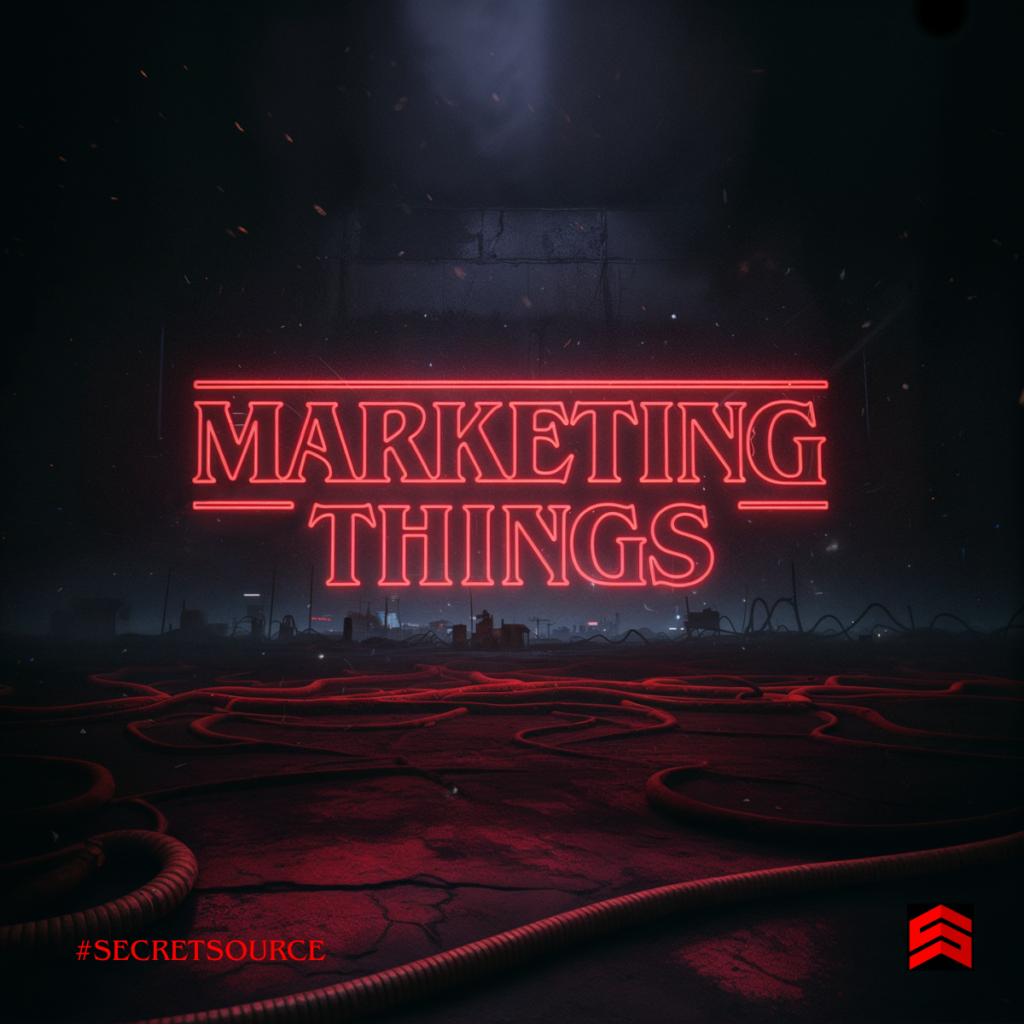
Marketing Things: How AI Turned Our Industry Upside Down

Remember when marketing was simpler? When we knew the rules, understood the landscape, and could predict what would work? Those days feel like Hawkins, Indiana in 1983, before everything changed.
Just like the kids in Stranger Things stumbled upon a parallel dimension that flipped their world on its axis, marketers today are navigating our own “Upside Down.” And the catalyst? Artificial Intelligence.

Welcome to the Upside Down
In Stranger Things, the Upside Down exists parallel to the normal world, it’s familiar yet fundamentally different, and filled with both challenges and possibility. AI has created a similar phenomenon in marketing. The channels we’ve always used are still there, but they operate by new rules we’re only beginning to understand.
Social media algorithms have become as unpredictable as a Demogorgon’s feeding pattern. Consumer behaviour shifts faster than Eleven can flip a van. And the tools we once relied on? They’re either evolving at breakneck speed or becoming obsolete before our eyes.
Take traditional SEO!? SEO lays the essential groundwork with focus on technical details, backlinks, and user experience. Yet, as we navigate the AI era, AEO and GEO emerge as vital additional strategies. These methods enrich SEO by tailoring content for voice search (AEO) and aligning online presence with local needs (GEO). Specialists suggest that these techniques contribute to a broader AI SEO framework, or AIO, fostering innovation in search optimisation strategies.
It’s the same world, but different…
The Party: Your Marketing Team in the New Reality
Just as Mike, Dustin, Lucas, and Will needed each other to survive their supernatural crisis, successful marketing today requires a diverse team with complementary skills.
The Strategist (Mike): Someone needs to see the big picture, connect the dots, and rally the team around a unified vision. In the AI era, this means understanding how machine learning, automation, and data analytics fit into your broader marketing goals.
The Tech Expert (Dustin): You need someone who geeks out over the latest tools and platforms. They’re the ones explaining how ChatGPT differs from Midjourney, or why your programmatic advertising needs recalibration. They speak the language of APIs and integrations fluently.
The Creative (Will): AI can generate content, but it takes human creativity to know what should be created. Your Will sees beyond the data to the emotional truth that resonates with audiences. They remind everyone that marketing is still about connecting with people, not just optimizing for algorithms.
The Sceptic (Lucas): Every team needs someone asking the hard questions. Is this AI tool actually delivering ROI? Are we sacrificing authenticity for efficiency? The sceptic keeps you grounded when the hype around new technology becomes deafening.
Eleven: The Power You Didn’t Know You Had
AI is marketing’s Eleven, a force with extraordinary capabilities that can seem overwhelming at first. Like Eleven learning to control her powers, marketers are discovering what AI can really do when properly directed.
AI excels at pattern recognition, personalization at scale, predictive analytics, and handling repetitive tasks. It can analyse customer data faster than any human team, optimize ad spend in real-time, and generate content variations for A/B testing. But just as Eleven needed guidance from Hopper and the gang, AI needs human direction, ethical guardrails, and strategic oversight.
The marketers who thrive aren’t those who fear AI or blindly embrace it, they’re the ones who learn to work alongside it, understanding both its capabilities and limitations.
The Mind Flayer: When AI Goes Wrong
Not every application of AI in marketing is benign. The Mind Flayer represents what happens when powerful forces lack ethical constraint or human judgment.
We’ve seen AI-generated content that’s tone-deaf, discriminatory, or just plain weird. We’ve watched algorithms optimize for engagement metrics while destroying brand trust. We’ve witnessed automation that stripped away the human touch customers were actually craving.
The lesson? AI is a tool, and tools can be misused. Your role as a marketer isn’t to let AI take the wheel, it’s to steer with intention, always keeping your brand values and customer relationships at the centre.

Navigating the Upside Down: Practical Strategies

Don’t Go It Alone

The characters in Stranger Things succeed because they stick together. Build a team (or partner network) that combines human creativity with technical expertise. No one person can master every aspect of AI-driven marketing.

Trust Your Compass

In the Upside Down, compasses spin wildly, except when they point toward the source of the disturbance. Your “compass” is your brand values and customer insights. When AI recommendations contradict what you know about your audience, trust your instincts.

Experiment, But Stay Grounded

Try new AI tools and approaches but maintain control groups and measure real outcomes. Not every shiny new platform is worth your investment, and not every AI-generated campaign will resonate with your audience.

Protect What Matters

The kids protect Hawkins; you protect your customer relationships. Use AI to enhance personalisation and service, but never at the expense of privacy, trust, or authentic connection.

Keep Learning

The Upside Down keeps evolving, and so does AI. Dedicate time to staying current with new developments but filter them through the lens of your specific marketing goals.

The Light in the Darkness
Try to remember that even in the scariest circumstances, human connection, creativity, and courage prevail.
AI hasn’t destroyed marketing, it’s created new opportunities for those willing to adapt. The brands that will thrive are those that use AI to amplify their human qualities, not replace them. Technology can help you reach more people, understand them better, and serve them more efficiently. But it can’t replicate genuine empathy, strategic intuition, or creative inspiration.
The Upside Down is real. AI has fundamentally changed our industry. But just like the residents of Hawkins, we’re not powerless in the face of change. We’re marketers, we adapt, we innovate, and we find ways to connect with people no matter what challenges we face.
So grab your flashlight, assemble your party, and let’s navigate this strange new world together. The monsters are real, but so are the opportunities.
What challenges are you facing in the AI-driven marketing landscape? At Secret Source Marketing, we help brands navigate the Upside Down with strategy, creativity, and just the right amount of technological firepower. Let’s talk about how we can help you turn AI into your greatest asset.
{{cta(‘191750915166′,’justifycenter’)}}

Uncategorized

Time for a Tech Stack Diet? Why Q1 Is Best Time To Get Your Business Fit for Growth

New calendar (and financial year for some) is a familiar crossroads for businesses of all shapes and sizes. Sales and marketing leaders, business owners, and CFOs review and take stock to what is required to hit targets. Budgets, processes and outcomes are scrutinised. But there’s one area that’s easy to overlook even as it quietly expands in size and complexity: your company’s tech stack.
Just like holiday indulgence, business tools and data can accumulate quietly over the years. A few must try marketing apps here, new sales enablement tools there, client data stored on every team’s favourite platform, overlapping CRM add-ons, and so on. The intentions are good, boost efficiency, address new needs, react to the latest trends, or simply try what everyone’s raving about. But as you roll into Q1, that agile, lightweight stack may be looking a little bloated.
At Secret Source, we call this the “Tech Stack Diet” The same way you might decide to trim down after the holiday season, now is the perfect time for your business to tighten up its tech stack, shedding the inefficiencies, integrating your data, saving money (quite literally shedding the pounds, dollars, Euros), and preparing for lean, healthy growth in 2026.
This article will guide you through the “why, what, and how” of a tech stack audit. We’ll arm you with reference lists, actionable steps, and expert insights to ensure your tools are working for you, not the other way around.
 
1. Why Is Now A Good Time for a Tech Stack Audit
Just as individuals set New Year’s resolutions to get healthier, organisations often resolve to work smarter, not harder. The start of budgeting season, is the moment of truth:

Financial Planning: Every tool you keep (or lose) impacts your budget for the coming year, critical for CFOs, business owners, and budget-holders, especially when markets are uncertain.
Goal Realignment: Sales and marketing leaders must ensure that the systems in place support next year’s objectives, whether it’s revenue growth, pipeline transparency, or market expansion.
Data Housekeeping: A clean slate is easier to maintain, auditing your data and tools now pays dividends when new strategies come into effect.
Process Optimisation: Inefficiencies and duplicate processes are magnified as teams go for ambitious targets; slimming down your tech stack helps clear the path for new initiatives.

2. How the Modern Tech Stack Expands, and Why That’s a Problem
It’s never anyone’s plan to wind up with 15+ business apps and no clear idea of which one is the “real” source of truth. Here’s how the bloat happens:
Department-Led Initiatives
Modern teams move fast. Sales grabs a new call-tracking tool. Marketing onboards the latest AI-powered analytics platform. Customer service adds a chatbot. At the moment, these silos seem harmless, even helpful, but they create invisible islands of data.
FOMO (Fear of Missing Out)
Peer recommendations and industry buzz lead to experimenting with “the next big thing.” Leaders hesitate to standardise for fear of missing an edge, but soon, half the team is duplicating effort in two tools instead of one.
Lightweight Apps and Shadow IT
“Let’s just use this for now.” These stopgaps can become permanent fixtures, leading to hidden costs and compliance challenges.
Organic Growth, Patchwork Solutions
As companies expand, stacks evolve piecemeal, leading to disjointed workflows, redundant subscriptions, and multiple versions of the same customer record.
Key Takeaway: Each tool added without holistic review increases complexity, cost, and confusion.
3. The Hidden Costs of an Overweight Stack
So what does a bloated tech stack really cost your business? More than you think.
Financial Wastage

Redundant subscriptions: Paying for licenses that do the same job, or never get used.
Payment creep: Forgotten free trials becoming annual bills.
Overprovisioning: Overbuilt (or underutilised) platforms bought just for one shiny feature.

Operational Inefficiencies

Manual data transfers: Data re-keyed from one system to another.
Version control headaches: Different departments running different versions of “the truth.”
Consistent re-training: New team members have to learn multiple interfaces.

Poor Data Quality & Fragmentation

Siloed databases: Data scattered across platforms.
Duplicate records: Multiple, conflicting profiles for the same customer.
Neglected or out-of-date data: “We’ll fix it later” until it’s too late.

Attribution and Reporting Issues

Inconsistent metrics: Reporting platforms pulling non-matching numbers.
Lost revenue opportunities: Inability to track leads, campaigns, or customer journeys accurately.

Risk Exposure

Security liabilities: Unknown apps may lack proper security compliance.
Business continuity: If key knowledge “lives” in one tool nobody else understands, what happens if that person leaves?

The Cost of NOT going on a tech stack diet include the following; 
💳Hidden Cost😞Subscription Waste📉Budget Drain, Overspending🗂️Siloed Dataa💡Poor Decision-Making, Lost Insights🔀Duplication of Effort📉Low Productivity, Staff Frustration📊Reporting Chaos📈Poor Attribution, Missed Revenue🛡️Security Risk

Uncategorized

96% Of People Who Say They Use AI Are Only Using 2% Of Its Potential

What Does “Using AI” Actually Mean?
When most people say they’re “using AI,” what they really mean is that they are using Large language models (LLMs) to help them with written text.  According to a recent Secret Source survey, 96% of respondents who claimed to use AI were only leveraging it for basic tasks like improving their writing or getting step-by-step instructions. Only 4% used AI for more strategic duties like monitoring performance, identifying potential issues or to generate their own AI Agents to help them with their work.
This led us to wanting to share more to how AI can be used within Sales, Marketing and Service roles that go beyond using it for basic admin. 

Uncategorized

Pardot (MCAE) vs HubSpot: Which Marketing Automation System is Right for You?

If you’re exploring Pardot vs HubSpot for your marketing automation needs, you’re likely looking for a system that can help streamline your marketing efforts, nurture leads, and ultimately drive growth. Whether you’re new to marketing automation or looking to switch from an existing platform, understanding the differences between Salesforce Pardot and HubSpot Marketing Hub is crucial in making the right decision for your business.

Scroll to Top