RevOps (Revenue Operations)

Uncategorized

Pardot (MCAE) vs HubSpot: Which Marketing Automation System is Right for You?

If you’re exploring Pardot vs HubSpot for your marketing automation needs, you’re likely looking for a system that can help streamline your marketing efforts, nurture leads, and ultimately drive growth. Whether you’re new to marketing automation or looking to switch from an existing platform, understanding the differences between Salesforce Pardot and HubSpot Marketing Hub is crucial in making the right decision for your business.

Uncategorized

What Does a Good CRM Migration Look Like? Why Now Is the Time to Rethink Your CRM Strategy

In the world of sales, marketing, and customer service, your Customer Relationship Management (CRM) system is the backbone of your operation. The perception we often see and hear is that migrating to a new CRM is disruptive and “If it ain’t broke, why fix it?”.
So your current CRM is like an old pair of comfortable slippers. You know where everything is, how it works, and how to navigate it with your eyes closed. But the digital landscape is evolving at lightning speed, especially with the rise of AI-powered CRM platforms, automation tools, and real-time analytics.
And here’s the hard truth: if you’re NOT actively investing in next-generation CRM solutions, your competitors are, and playing catch up is not the place you want to be. So read on to why reviewing the CRM marketplace is a perfect time. 
So kick off those slippers and get yourself some running shoes! 

Uncategorized

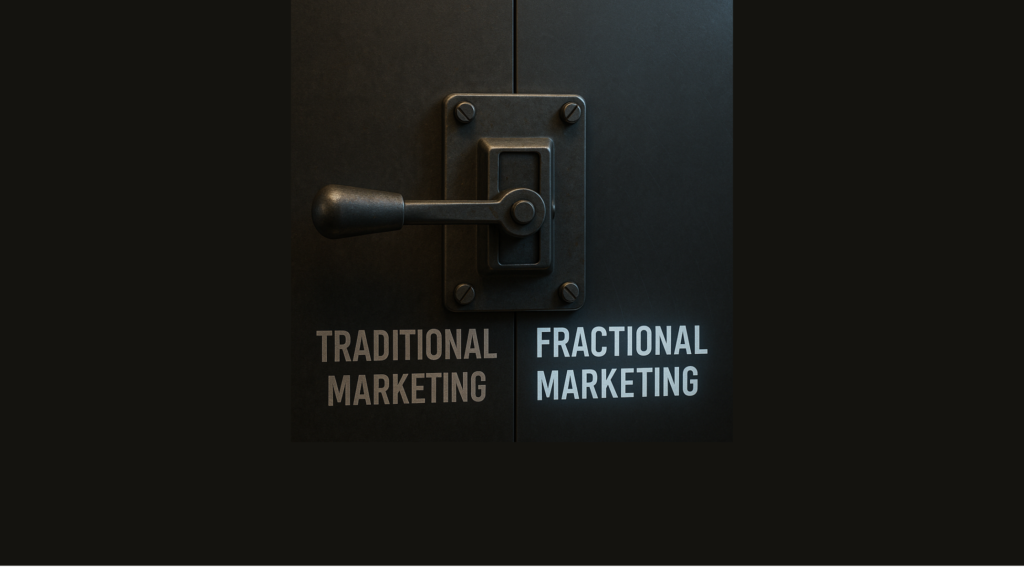
Why Business Leaders and Marketing Directors are Switching to Fractional Marketing Leadership

In today’s competitive marketplace, savvy business leaders, marketing directors, and growth-stage companies are increasingly moving away from traditional in-house marketing structures. Instead, they’re embracing fractional marketing leadership, such as hiring a Fractional CMO or fractional marketing director, to access strategic expertise precisely when it’s needed, without the commitment or costs of a full-time role. Marketing leaders are also choosing to switch to more fractional roles to give them the flexibility and variety in their career. 

Uncategorized

Top 5 Revenue Operations Best Practices for Sustainable Growth

In today’s competitive B2B, B2C landscape, Revenue Operations (RevOps) is the backbone of sustainable growth. By aligning sales, marketing, and customer success into a single revenue-generating engine, RevOps eliminates silos, improves operational efficiency, and increases visibility into the entire customer lifecycle.
According to Boston Consulting Group, businesses that implement a robust RevOps strategy can experience up to 100% increase in digital marketing ROI and 10–20% improvement in sales productivity. A great source of help and guidance can be found via RevOps Finder a free to join community of RevOps professionals, business thought leaders, sales, marketing and service professionals from around the world. 
So, how can RevOps professionals and marketers ensure long-term success? Here are the top five revenue operations best practices, presented as a practical checklist you can apply to your day-to-day operations.

Uncategorized

HubSpot vs. Pipedrive: What’s A Good Long Term Investment

When choosing a CRM, businesses must consider not just short-term efficiency but also long-term scalability, ease of use, and overall value. In the crowded CRM software market, from small business CRM to enterprise-grade platform, two major players stand out: HubSpot CRM and Pipedrive CRM. Both platforms are excellent at sales pipeline management, but their true strengths diverge when you look at automation, analytics, and cross-team collaboration.

Uncategorized

A Complete Guide to a Successful CRM and Data Migration: Moving from One System to Another

In today’s fast-paced business environment, upgrading to a more efficient Customer Relationship Management (CRM) system can be a game-changer. Whether your current CRM is outdated, lacks functionality, or fails to align with your business goals, migrating to a new CRM—like HubSpot Smart CRM—can help improve efficiency, data accuracy, and sales effectiveness. However, a CRM migration isn’t just about moving data; it’s about ensuring a seamless transition with minimal downtime and maximum user adoption.{{cta(‘186869927531′,’justifycenter’)}}

Uncategorized

Your Tech Stack Is Too Big: Streamlining Marketing Tools for Actual ROI

{{cta(‘186869927531′,’justifycenter’)}}

Introduction: Is Your Tech Stack Doing More Harm Than Good?
Over the past decade, business leaders have been inundated with the latest and greatest tech solutions, all promising to drive efficiency, improve customer experiences, and increase revenue. Sales, marketing, finance, and operations teams have eagerly adopted new platforms to stay competitive — from CRMs and automation tools to data analytics platforms and communication apps.
But instead of boosting performance, the result has often been the opposite: an overstuffed, fragmented tech stack that complicates workflows, creates data silos, and bleeds budgets.
A report from HubSpot reveals that the average marketing team uses 12 different tools to execute a single campaign — yet only 22% of marketers believe their tools are integrated well enough to provide a single source of truth. [source]
This patchwork of tools leads to:✅ Conflicting data✅ Unnecessary costs✅ Poor customer experience✅ Internal confusion
It’s time for a strategic reset. A leaner, more streamlined tech stack can improve efficiency, enhance customer experience, and significantly boost ROI. Here’s how to conduct an effective audit and start simplifying your systems.

1. The Problem With Overlapping and Redundant Tools
How We Got Here
The rise of Software-as-a-Service (SaaS) platforms has made it easy for departments to adopt new tools without going through IT or procurement. Over time, this has created a chaotic environment where:

Marketing, sales, and operations are using different CRMs or automation tools.
Multiple platforms provide overlapping features like email automation, customer segmentation, and data visualization.
Data is scattered across different systems, making it difficult to get a unified view of customer behavior.

The Impact of Redundancy
A study by Blissfully found that the average mid-sized company uses over 130 different SaaS apps — and spends up to $10,000 per employee annually on SaaS licenses. [source]
But here’s the kicker: 39% of these tools have overlapping functionalities — which means companies are paying for capabilities they already have elsewhere.
According to Paul De’ath, Director at Secret Source:

“Managing lots of different unconnected systems creates confusion internally among stakeholders, but also among prospects, customers, and business partners in the marketplace.” (Secret Source) 

2. Why a Bloated Tech Stack Hurts Your ROI
1. Increased Costs
When multiple tools do the same job, you’re not just paying for extra licenses — you’re also wasting budget on training, maintenance, and support.
A report by Gartner found that businesses waste up to 29% of their SaaS spend on redundant or unused tools. [source: Gartner]
2. Poor Customer Experience
Customers now expect a seamless omnichannel experience. When data and workflows are spread across multiple systems, it creates:

Inconsistent messaging across channels.
Slow response times from customer service.
Conflicting customer data between sales and marketing.
3. Slower Decision-Making

Fragmented data makes it harder for business leaders to get a clear picture of performance. Decision-making becomes slower and less informed because:

Data from different platforms doesn’t align.
Teams have to manually consolidate reports.
Performance metrics are inconsistent across systems.

3. How to Streamline Your Tech Stack for Maximum ROI
Step 1: Conduct a Tech Stack Audit
Start by conducting a full audit of your current tech stack. Work with all department heads to map out every tool being used and its purpose.
According to Nicholas Carlson, a Secret Source Specialist:

“Our team conducts tech stack audits for business leaders around the world and uncovers the ‘unknown unknowns’ — the tools and processes that companies don’t even realize are holding them back.”

✅ List out every tool, platform, and app being used.✅ Identify which teams are using which tools.✅ Document the cost of each tool (including hidden costs).✅ Map out any overlap in functionality.

Step 2: Evaluate Usage and Performance
Once you have a full map of your tech stack, analyze how each tool is being used:

Are teams actively using the tool?
Is the tool driving measurable business value?
Does it provide unique capabilities, or does it duplicate another platform’s function?

Cut any tools that aren’t being used regularly or aren’t contributing to measurable business results.

Step 3: Consolidate Tools Where Possible
Rather than using separate platforms for CRM, marketing automation, and customer support, consider consolidating these functions into a single platform.
According to Alistair Knox, CIO at Secret Source:

“Simplification of systems and processes is the key. It’s easy to envision but difficult to execute without some objective help.” (Secret Source)

Modern CRMs like HubSpot, Salesforce, and Zoho now offer integrated solutions that cover:✅ CRM✅ Email marketing✅ Social media scheduling✅ Analytics and reporting✅ Customer service
Consolidating to a single platform reduces costs, improves data consistency, and simplifies reporting.

Step 4: Automate and Integrate
Once you’ve reduced the number of tools, focus on building automated workflows and seamless integrations:

Automate data transfers between platforms.
Set up triggers and notifications to keep teams aligned.
Ensure that customer data flows seamlessly between sales, marketing, and support.

Step 5: Measure and Optimize
After streamlining your tech stack, continuously monitor performance:

Track user adoption of new platforms.
Measure cost savings from reduced licenses.
Monitor customer experience improvements (faster response times, fewer complaints).

Adjust and refine the stack based on real-world results.

4. The ROI of a Streamlined Tech Stack
A leaner, more efficient tech stack leads to tangible business benefits:✅ Lower Costs – Reduced spending on licenses, training, and support.✅ Higher Productivity – Fewer platforms mean less time spent switching between tools.✅ Better Customer Experience – Consistent messaging, faster response times, and unified data.✅ Increased Revenue – More efficient sales and marketing efforts translate to higher conversions.

✅ Tech Stack Streamlining Checklist
Use this quick checklist to streamline your tech stack:
✔️ Conduct a full tech stack audit✔️ Identify overlapping and redundant tools✔️ Evaluate usage and business impact✔️ Cut tools that aren’t providing value✔️ Consolidate functions into a single platform✔️ Automate workflows and integrations✔️ Monitor and measure performance

📥 Get the Guide: Streamline Your Tech Stack for Better ROI
Ready to simplify your tech stack and boost performance? Download our step-by-step guide to conducting a tech stack audit and optimizing your platforms for maximum ROI.

Sources:

Blissfully SaaS Report: https://www.blissfully.com
HubSpot State of Marketing Report: https://blog.hubspot.com
Gartner SaaS Spending Report: https://www.gartner.com 

Uncategorized

The Benefits of a Unified Sales and Marketing CRM

Why a Unified Sales and Marketing CRM is Essential for Business Growth
Aligning sales and marketing teams is no longer optional, without a unified CRM, companies risk inconsistent messaging, lost leads, and inefficient reporting. Businesses that break down silos and implement a Revenue Operations (RevOps) strategy with a centralized sales and marketing CRM experience higher revenue growth, better customer retention, and improved operational efficiency. In this article, we’ll explore the real-world benefits of integrating your teams within a single CRM system like HubSpot, why transitioning away from fragmented platforms such as Zoho, Salesforce, Pipedrive, NetSuite, and Insightly makes sense, and how a seamless CRM adoption can drive success.

Uncategorized

Why CFOs Are Loving Fractional Marketing (and How It Could Save You 70%)

Why a Unified Sales and Marketing CRM is Essential for Business Growth
In today’s fast-paced business landscape, the pressure on CFOs to deliver growth while managing costs has never been greater. Enter Fractional Marketing—an agile, cost-effective solution that’s transforming how modern businesses approach marketing.
At Secret Source Marketing, we’ve seen a surge in demand for Fractional Marketing Teams and Leaders, and it’s easy to understand why: this model delivers blue-chip marketing talent, without the hefty overheads.

Scroll to Top